
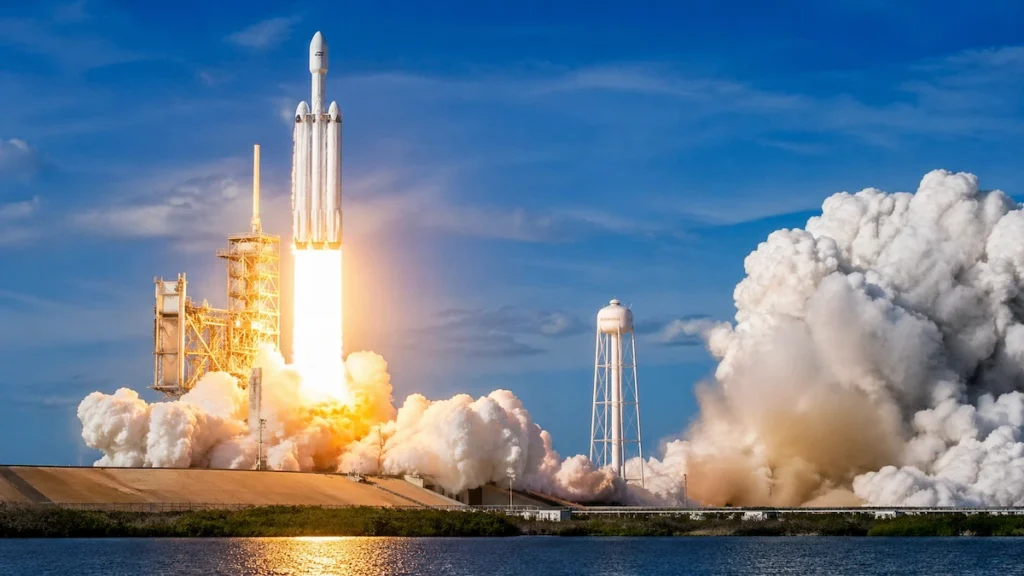
SpaceX Falcon Heavy Launch is gaining global attention once again after the latest delay of the mission; the launch is set to the latest launch window. Falcon Heavy grabs a lot of attention because it is one of the most powerful operational rockets in the world. It is capable of lifting heavy payloads that smaller rockets cannot handle. In this mission, the rocket is preparing to carry the powerful ViaSat-3 communications satellite into space. SpaceX built the Falcon Heavy rocket; it is made by combining three Falcon 9 boosters, which makes it strong enough to carry large satellites, deep-space cargo, and future exploration hardware beyond Earth orbit. Falcon Heavy is ready to carry the ViaSat-3 satellite into space. ViaSat-3 is an advanced communications satellite that is designed to increase internet coverage and network capacity across wide areas. If this mission is successful, it could help to improve communications for remote areas, aircraft crossing oceans, ships at sea, and areas where traditional networks are weak or difficult to build.
Space mission delays are common and often happen for good reasons. Engineers may need extra checks for weather, hardware performance, fueling systems, or final safety reviews. In today’s space industry, delaying a launch is often a wiser choice than moving too fast. Interest is now rising around the updated launch date, the readiness of the rocket, and how this mission could shape future heavy-payload launches. Let’s break down all the updates regarding the SpaceX Falcon Heavy launch.
New Launch Date, Time Of The Mission
After the recent delay of the SpaceX Falcon Heavy launch due to the bad weather, all are waiting for the next launch date. According to the latest official updates, the rocket is now targeting April 29 at 10:13 a.m. EDT (1403 GMT) from Launch Complex 39A at Kennedy Space Center. This means a new countdown has been started, and researchers are taking this extra time for the benefit of the launch. They are doing final technical checks, fuel checks, and weather monitoring. The first delay of the SpaceX Falcon Heavy launch happened because the weather conditions were not favorable for the liftoff. In spaceflight, weather is more serious than people think. Strong winds, lightning, thick clouds, or electrical activity can damage a rocket or affect the safety of flight. That is why launch providers push the date and delay the mission till the weather is clear.
Scientists found a comet releasing water in sapce
What Is the Viasat-3 Satellite, and Why Does It Matter?

The SpaceX Falcon Heavy launch is preparing to send the ViaSat-3 satellite to space. It is an advanced communications satellite; its main purpose is to improve internet connection across the large parts of the world. ViaSat-3 is part of a global satellite network that is designed to deliver high-speed broadband service to homes, airlines, ships, and remote regions where traditional ground networks are weak or unavailable. The data capacity of this satellite is massive, and this capacity makes it special. ViaSat-3 class satellites are capable of handling far more traffic than many older communication satellites. That means it gives stronger connections, better streaming quality, and more reliable internet in remote areas. This technology helps in education, business, medical facilities, and emergency communication for the people who live in areas far from cities.
Why Falcon Heavy Was Chosen For This Mission
To send the ViaSat-3 into space, SpaceX Falcon Heavy launch is necessary because ViaSat-3 is a huge and heavy satellite; that’s why a powerful rocket like Falcon Heavy is needed. After the liftoff, the rocket will leave the satellite in its operational position (approximately 35,786 kilometers) above the earth. If this mission is successful, the SpaceX Falcon Heavy launch will not just act like a courier that transports satellites into space. It could help millions of people to get close to an internet connection and make their daily lives easier. That’s why this mission is important not only for the launchpad but also around the world.
How Viasat-3 Could Improve Global Internet Access
ViaSat-3 is designed to improve global internet connectivity by providing broadband services over very large regions. It also includes places where traditional networks like cables, towers, or fiber networks are difficult to build. Now we are in the 21st century, but still many rural areas, islands, aircraft, and ships face slow or limited internet connections. The ViaSat-3 satellite aims to fill this gap of internet connection. The data capacity of this satellite is very high. That means it can handle more users and more online activity at the same time as compared with many older communication satellites. It makes better video calls with less buffering, better streaming, and stronger business connections in those areas that are currently facing weak connections.
ViaSat-3 could also support emergency communication during natural disasters when all the ground networks are damaged. Stable internet could be very useful for online learning, telemedicine, and digital tools in remote areas, schools, and health care centers. This mission makes their daily life easier. For sending such an advanced satellite like ViaSat-3, a powerful rocket is required, so the SpaceX Falcon Heavy launch is very important.
What Makes Falcon Heavy One of the Most Powerful Rockets?
Falcon Heavy is one of the most powerful operational rockets in the world. Its unique design makes it extraordinary and strong. Instead of using one main booster, Falcon Heavy combines three Falcon 9 first-stage boosters strapped together. This gives the rocket a total of 27 Merlin engines firing at liftoff, creating more than 5 million pounds of thrust. It has enough power to carry heavy satellites, deep-space cargo, and large missions that smaller rockets cannot handle.
The SpaceX Falcon Heavy launch is also impressive because the rocket can carry payloads much heavier than standard launch vehicles. It is capable of sending large satellites toward geostationary orbit, where many communication spacecraft operate. It can also support missions to the Moon, Mars, and beyond. This heavy-lift ability makes Falcon valuable for both commercial customers and future exploration plans.
Another reason people admire the SpaceX Falcon Heavy launch is reusability. Its side boosters are designed to return and land after launch, helping reduce mission costs and speed up future flights. Seeing two boosters land almost together has become one of the most dramatic sights in modern spaceflight.
Conclusion
In this article we discuss all about the SpaceX Falcon Heavy launch. This is one of the most powerful rockets in the world. In this mission it carries the ViaSat-3 satellite that helps to improve the internet connectivity across the world. While the recent delay may have slowed the countdown, such postponements are common in spaceflight and are usually made for safety, weather, or technical checks. Another launch date is officially announced, as I told you before. If this mission were successful, then it could provide a fast internet connection to remote areas, ships, aircraft, and areas where ground networks are weak or difficult to set up. The SpaceX Falcon Heavy launch could play an important role in improving internet access around the world. As the new launch window of SpaceX’s Falcon Heavy launch approaches, interest continues to grow.