
SpaceX Starship Flight 14 is almost ready to make history this week. This mission is different from every test that Starship has attempted before. Previous 13 flights were designed as suborbital tests, but Flight 14 is planned to take Starship into Earth orbit for the first time. If everything goes well in the mission, it will be a major new step for the rocket program and could give SpaceX important data about long-duration flight, satellite deployment and orbital reentry.
SpaceX Starship Flight 14 result
Roman Telescope sends First Image
What Makes SpaceX Starship Flight 14 Different From Every Previous Test
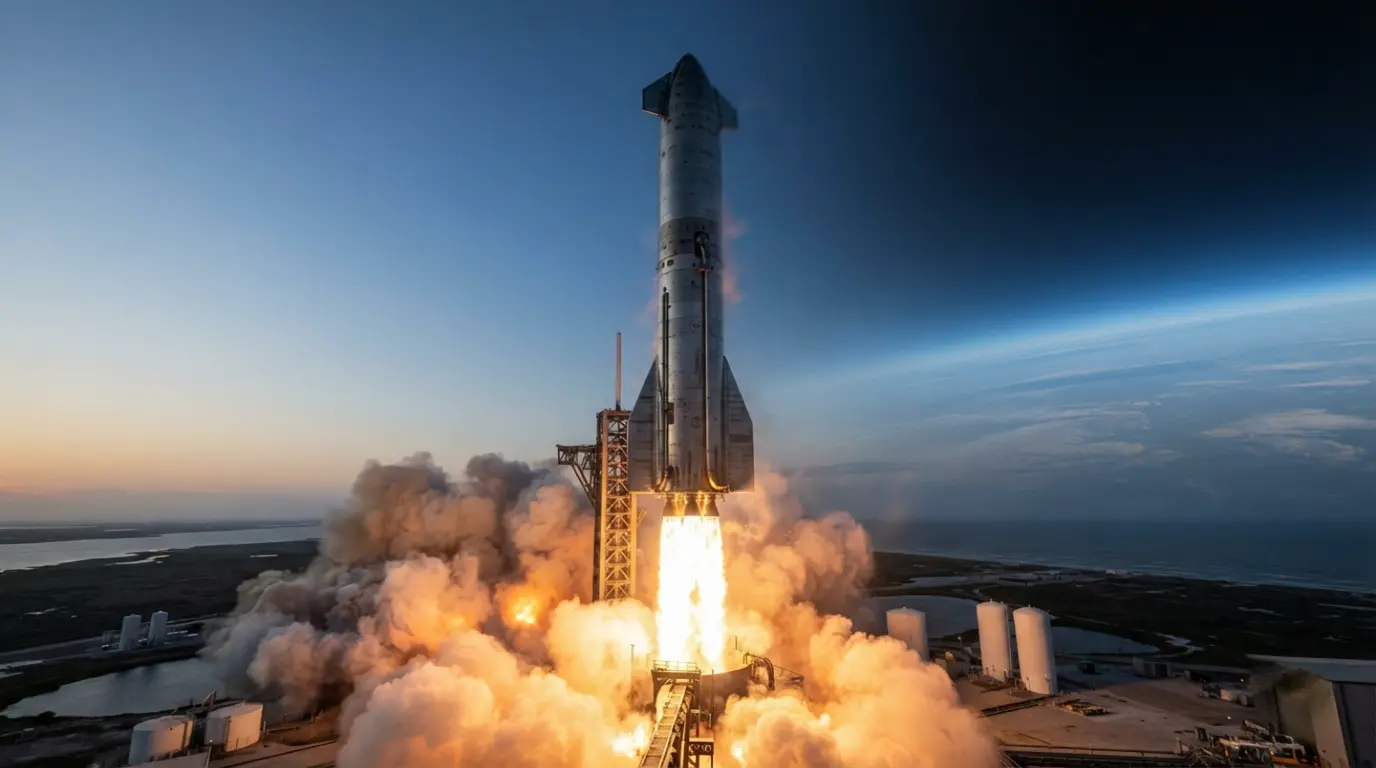
SpaceX Starship Flight 14 is currently scheduled to lift off as early as Monday, September 28, from Starbase, Texas, with a 75-minute launch window opening at 7:15 a.m. Central Time or 8:15 a.m. Eastern Time. The mission still require permission from the Federal Aviation Administration before it can actually depart. However, the rocket has now passed its last technical review before liftoff after completing a full wet dress rehearsal on September 24, filling both the Super Heavy and Ship with liquid fuel and going through the countdown procedure until ignition. This is one of the final major checks before a launch attempt.
The difference between SpaceX Starship Flight 14 and the previous 13 flights is the mission profile. Earlier Starship flights were intentionally kept on suborbital paths and avoided a full orbit path. But this time the upper stage called, Ship 41 is planned to enter orbit and spend several hours traveling around Earth. The spacecraft is expected to reach an altitude of about 275 kilometers and it will complete roughly 6 orbits of earth before returning back. This entire mission will take around 10 hours before the spacecraft comes back to earth. The mission will use Ship 41 as the upper stage and Booster 21 as the Super Heavy first stage. The flight, SpaceX will test both stages and obtain data to improve their successors.
The Riskiest Part: SpaceX Starship Flight 14 Has Never Been Tested Before

Getting Starship into orbit is just part of the battle. One of the challenges during the SpaceX Starship Flight 14 will be returning of Ship 41 from the orbital speed. After spending several hours in space, ship 41 is expected to perform deorbit burn and re-enter the Earth’s atmosphere. It will be more challenging than a short suborbital flight.
During reentry, Starship will face intense heating and enormous forces as it moves through the atmosphere at extremely high speed. Its heat shield and structure must handle a lot of pressure during the uncontrolled (relative to the spacecraft’s center of gravity) atmospheric dive. According to the current current plan, Ship 41 perform its landing sequence and splashdown somewhere in the Pacific Ocean west of Chile, rather than attempting the tower catch at the Starbase. So, the SpaceX Starship Flight 14 will not only be a test of taking starship into orbit but also of returning it. Such a flight is necessary to gain vital experience with the orbital flight and landing.
Starship Will Carry 26 Starlink Satellites
SpaceX Starship Flight 14 is not just testing the rocket. This time, company plans to send some actual payload instead of a dummy one, through the mission. Flight will deploy 26 upgraded Starlink V3 satellites into orbit.
Scientists expect that each satellite add about 1 terabit per second of capacity to the Starlink network. Together, the 26 satellites could add roughly 26 terabits per second of total capacity. That would be a major increase compared with a typical Falcon 9 launch carrying older Starlink satellites. It also means the mission could have a direct impact on everyday Starlink users, not just SpaceX’s testing program.
Why the Outcome of SpaceX Starship Flight 14 Matters So Much?
Starship is currently the tallest and most powerful rocket ever built, and SpaceX Starship Flight 14 could be an important step for regular missions. A successful flight means that Starship can reach orbit, release satellites, and safely return to Earth. These capabilities will be important for future missions like launching heavier loads into space, refueling spacecrafts in space, and supporting NASA’s Artemis program for sending astronauts to the Moon.
The schedule for SpaceX Starship Flight 14 can still change. Weather, regulatory approval, or last-minute technical checks could delay the launch. SpaceX also plans to stream the mission live. The broadcast will start about 30 minutes before liftoff and continuing until splashdown.
If mission will success engineers obtain valuable data about orbital flight, spacecraft performance, satellite deployment and atmospheric reentry. But if the mission does not complete every planned objective, the test could still provide information that helps SpaceX improve the next vehicle. No matter what happens, SpaceX Starship Flight 14 will still be an important test for the program.